
Uffizi Gallery
Use this guide to find Botticelli’s Room, time the Tribuna, and avoid corridor bottlenecks.
Read this before you enter
Avoid the most common visitor mistakes.
Visitor essentials
Entry timing, rules, facilities, and the simplest way to arrive.
Arrival timing
Enter at Door 1 within 15 minutes of your timed slot.
Public transport
From Firenze SMN station, plan a 20-minute walk to Piazzale degli Uffizi.
Bags & storage
Leave umbrellas and large backpacks at the free cloakroom near the entrance.
Security checks
Metal-detector screening at Door 1; sharp objects and aerosols are confiscated.
Photography rules
Still photos allowed without flash; video and tripods are not permitted.
Accessibility
Step-free entry and lifts start near Door 1; request staff assistance at the desk.
Inside the Uffizi, step by step
Follow the standard route and hit the named rooms that hold the works most people came for.
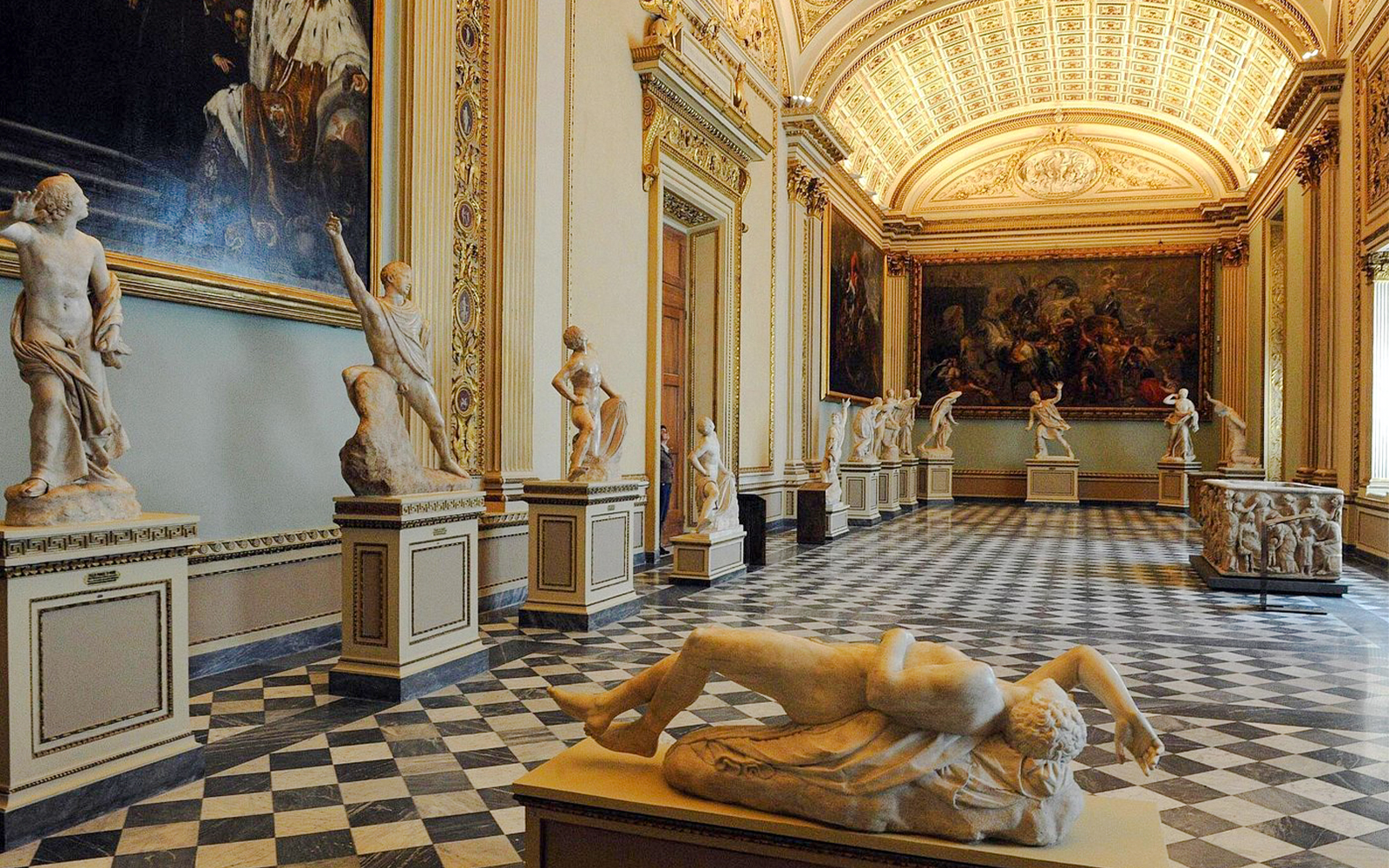
Ground-floor corridors and early galleries
Pick up the first read of the Medici collection in the ground-floor rooms before the staircase pushes you upstairs. Marble and bronze set the tone for the rest of the route.
What to notice here
- Medici Venus
Check the restored nose and hairline after the 2012 damage.
- Sleeping Hermaphroditus
Walk to the back to read the body’s twist from hip to shoulder.
- Laocoön and His Sons
Stand slightly left to see the Bandinelli's versions strained torso.
⚡ Quick story
This floor frames the Uffizi as a Medici museum built from Roman models and Renaissance collecting. The sculpture-heavy start calibrates your eye before the paintings upstairs.
📍 Visitor tip
Spend 10 minutes here, then take the main staircase to the second floor for the core painting route.
Explore Smarter
Insider shortcuts, better routes, and smart decisions that save time inside.
Go straight to Floor 2
Start at Botticelli Rooms 10–14 first; by 11:00 the doorway clogs and you’ll shuffle shoulder-to-shoulder past Venus.
Hunt the Niobe Room
Find Sala della Niobe just off the main run; the marble group is often empty while the Botticelli corridor jams.
Take the counterclockwise loop
From Room 2, turn left and keep circling; you hit Botticelli, then Leonardo and Michelangelo without backtracking corridors.
Deprioritise the print cabinets
Skip the Gabinetto dei Disegni e delle Stampe unless it’s open; it’s a detour with limited slots and long waits.
Use the Tribuna peek
At Tribuna’s doorway, take the quick sightline and move on; the micro-queue burns 10–15 minutes for one room.
Go straight to Floor 2
Start at Botticelli Rooms 10–14 first; by 11:00 the doorway clogs and you’ll shuffle shoulder-to-shoulder past Venus.
Hunt the Niobe Room
Find Sala della Niobe just off the main run; the marble group is often empty while the Botticelli corridor jams.
Take the counterclockwise loop
From Room 2, turn left and keep circling; you hit Botticelli, then Leonardo and Michelangelo without backtracking corridors.
Deprioritise the print cabinets
Skip the Gabinetto dei Disegni e delle Stampe unless it’s open; it’s a detour with limited slots and long waits.
Use the Tribuna peek
At Tribuna’s doorway, take the quick sightline and move on; the micro-queue burns 10–15 minutes for one room.
Best routes through Uffizi Gallery
See the essentials fast, follow Uffizi’s biggest names, or explore the gallery room by room.
The essentials in 2 hours
Best for first visitsHit the headline rooms fast, before the Tribuna bottleneck builds.
2nd-floor Early Renaissance rooms (Giotto and Cimabue)
20-25 minsBotticelli Room (Primavera and Birth of Venus)
25-35 minsLeonardo da Vinci and Michelangelo Room
20-30 minsRaphael Room (Madonna del Cardellino)
15-20 minsTribuna (octagonal jewel room)
10-15 minsCaravaggio Room (Medusa and Bacchus)
15-20 mins2nd-floor Early Renaissance rooms (Giotto and Cimabue)
20-25 minsBotticelli Room (Primavera and Birth of Venus)
25-35 minsLeonardo da Vinci and Michelangelo Room
20-30 minsRaphael Room (Madonna del Cardellino)
15-20 minsTribuna (octagonal jewel room)
10-15 minsCaravaggio Room (Medusa and Bacchus)
15-20 minsBotticelli and High Renaissance in one sweep
Best for art loversPrioritise Uffizi’s biggest names with minimal detours and resets.
Botticelli Room (Primavera and Birth of Venus)
30-40 minsFilippino Lippi Room (Madonna and saints panels)
15-20 minsLeonardo da Vinci and Michelangelo Room
25-35 minsRaphael Room (portraits and Madonnas)
20-30 minsTitian and Venetian painting rooms (Venus of Urbino)
25-35 minsCaravaggio Room (Medusa and Bacchus)
15-20 minsBotticelli Room (Primavera and Birth of Venus)
30-40 minsFilippino Lippi Room (Madonna and saints panels)
15-20 minsLeonardo da Vinci and Michelangelo Room
25-35 minsRaphael Room (portraits and Madonnas)
20-30 minsTitian and Venetian painting rooms (Venus of Urbino)
25-35 minsCaravaggio Room (Medusa and Bacchus)
15-20 minsThe full Uffizi circuit, room by room
Best for deep divesWalk the 2nd floor end-to-end, then mop up key 1st-floor rooms.
2nd-floor Early Renaissance rooms (Duecento–Trecento)
30-40 mins2nd-floor Quattrocento rooms (Fra Angelico and Filippo Lippi)
35-45 minsBotticelli Room (Primavera and Birth of Venus)
30-45 minsLeonardo da Vinci and Michelangelo Room
30-40 minsRaphael rooms and corridor sequence
35-45 minsTribuna (octagonal jewel room)
15-20 minsVenetian masters rooms (Titian and Veronese)
30-40 minsBaroque finale (Caravaggio Room)
20-30 mins2nd-floor Early Renaissance rooms (Duecento–Trecento)
30-40 mins2nd-floor Quattrocento rooms (Fra Angelico and Filippo Lippi)
35-45 minsBotticelli Room (Primavera and Birth of Venus)
30-45 minsLeonardo da Vinci and Michelangelo Room
30-40 minsRaphael rooms and corridor sequence
35-45 minsTribuna (octagonal jewel room)
15-20 minsVenetian masters rooms (Titian and Veronese)
30-40 minsBaroque finale (Caravaggio Room)
20-30 minsHidden details most visitors walk past
Five easy-to-miss specifics inside the Uffizi, each pinned to a room and wall.
Spot these as you follow the first-floor enfilade through the main sequence.
Tribuna’s red-shell dome ceiling
First floor, Tribuna (Octagonal Room), center of the room
Look for: Look up for the crimson dome inlaid with real mother-of-pearl shells set into red velvet-like panels around the oculus.
Why it matters: The Tribuna was built in 1584 for Francesco I de’ Medici as a showpiece where art, gems, and natural wonders shared one room.
Tribuna’s pietre dure floor
First floor, Tribuna (Octagonal Room), floor under the central ring
Look for: Look down for the circular inlaid marble pattern with hardstone segments (pietre dure) arranged like a compass rose around the center.
Why it matters: The floor is a Medici-era statement in Florentine stonework, linking the gallery to the Opificio delle Pietre Dure tradition.
Medusa round shield by Caravaggio
First floor, Room 90, wall case near the Caravaggio hang
Look for: Find the convex wooden rondache painted with Medusa’s severed head, with blood jets and a greenish pallor that catches light on the curve.
Why it matters: Caravaggio painted this around 1597 as a Medici gift, turning a parade shield into a virtuoso exercise in illusion and terror.
Tiny Annunciation predella panels
First floor, Botticelli room (Room 10–14 area), below the main altarpiece frames
Look for: Scan the lowest strip of the frames for thumbnail scenes with gold ground and miniature architecture, often labeled as predella panels.
Why it matters: Predellas carried the story sequence for Renaissance altarpieces, and the Uffizi’s surviving strips show how viewers read paintings scene-by-scene.
Venus’s hair strands in Botticelli
First floor, Room 10–14 (Botticelli), The Birth of Venus, right half of the canvas
Look for: Stand by the barrier and track the fine, dark lines that define Venus’s hair curls, especially where strands cross the pale sky near her shoulder.
Why it matters: Botticelli’s line-first technique from the 1480s is clearest in hair and drapery outlines, where drawing drives the entire painting’s rhythm.
What deserves your time
Not every stop offers the same payoff. Here’s what to prioritise, what can quietly eat into your visit, and what’s worth saving for later.
Do not miss
Botticelli Room 10–14
Anchor your visit in Rooms 10–14 with Botticelli’s “Primavera” and “Birth of Venus”; the crowd flow makes return visits slower.
Room 15 — Leonardo and Michelangelo
In Room 15, focus on Leonardo’s “Annunciation” and Michelangelo’s “Doni Tondo”; this corridor bottlenecks after tour groups bunch up.
Time traps
Reading every wall label in Gallery 2
In the Second Floor corridors, label-by-label reading turns 30 minutes into 90, and key rooms like 15 and 18 get rushed.
Peak-hour rooftop café line
The Uffizi café near the terrace backs up around 12:30; a coffee becomes a 25-minute standstill between rooms.
Worth it if you have time
Caravaggio and Artemisia, Room 90
If you have time, finish in Room 90 for Caravaggio and Artemisia Gentileschi; the late-Baroque rooms stay calmer after 16:00.
Niobe Room, Room 34
Add the Niobe Room (Room 34) for marble drama and quieter sightlines; it sits off the main painting sequence.
Making your Uffizi visit easier
Reduce stairs, standing, and decision fatigue with smarter routes inside the Uffizi.
Accessibility & easier access
Cut stairs and standing by using lifts and a shorter highlights plan.
- Use the museum’s accessibility entrance where available; ask staff on arrival to confirm the step-free route.
- Prioritise one floor and 8–12 headline works instead of attempting every room in one loop.
- Plan a sit-down stop at the Uffizi café terrace level, then continue only if energy holds.
With young kids
Keep it short, stroller-smart, and focused on a few famous rooms.
- Use a baby carrier for the busiest rooms; strollers clog bottlenecks around Botticelli and Leonardo.
- Pick 3 anchors—Botticelli, Caravaggio, and the Arno-facing corridor—then call time before attention drops.
- Time toilet stops around floor changes; ask staff to point you to the nearest facilities.
Best photo stops inside Uffizi Gallery
Five angles in Uffizi Gallery that dodge bottlenecks and nail Florence context.
 ICONIC VIEW
West Corridor windows
Shoot Vasari Corridor windows at 8:15am; frame Arno and Ponte Vecchio through the arched panes.
 RIVER BACKDROP
Uffizi Loggia arches
Stand under the riverside arches at 10:00; frame the Arno between columns with low foot traffic.
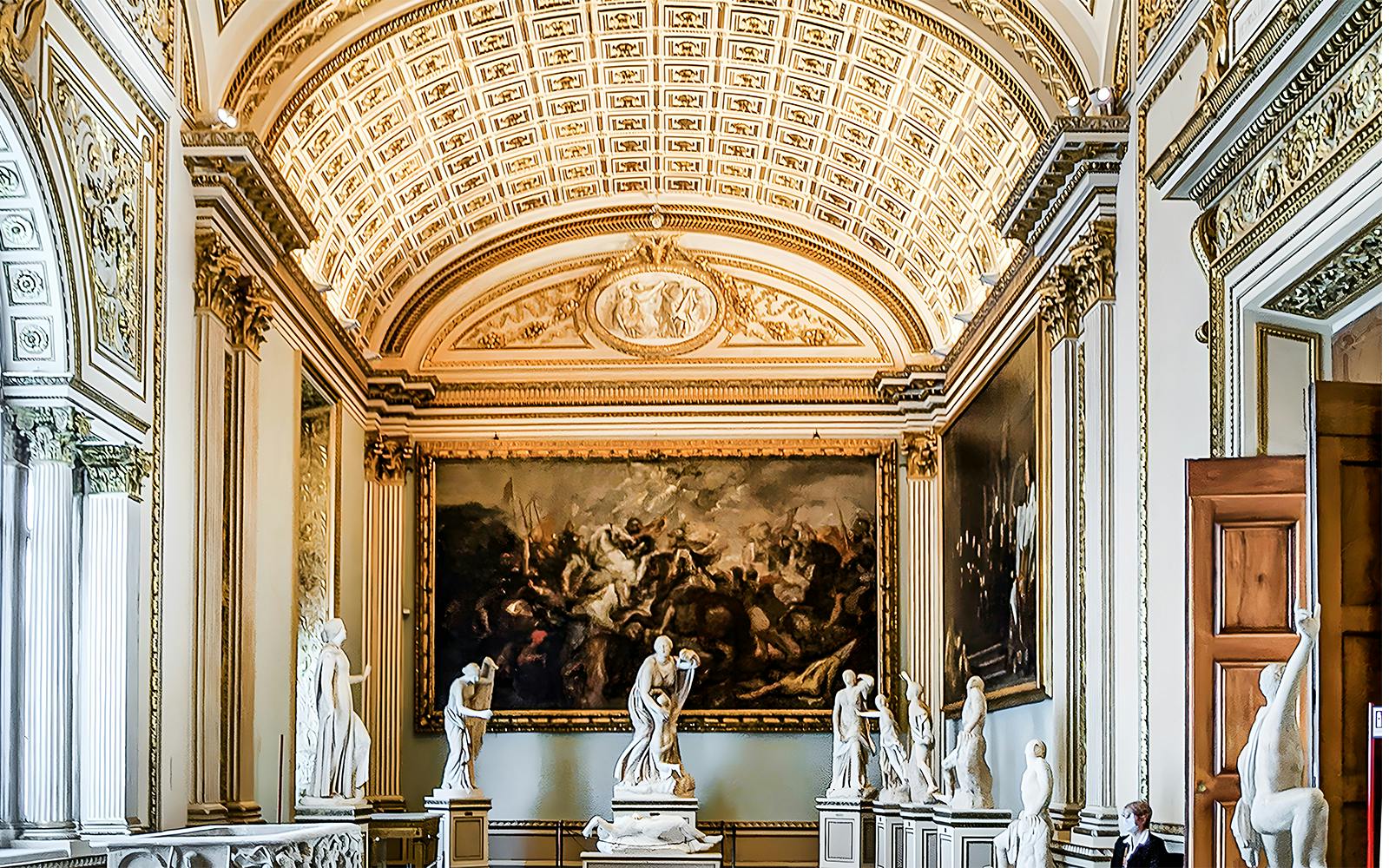
DRAMATIC SHOTBotticelli Room doorway
At 12:30, shoot through the doorway; frame crowds as silhouettes against Primavera wall lighting.
 GOLDEN HOUR
Piazzale Uffizi courtyard
At 18:30, shoot north down the courtyard; frame statues and the long perspective to Piazza della Signoria.
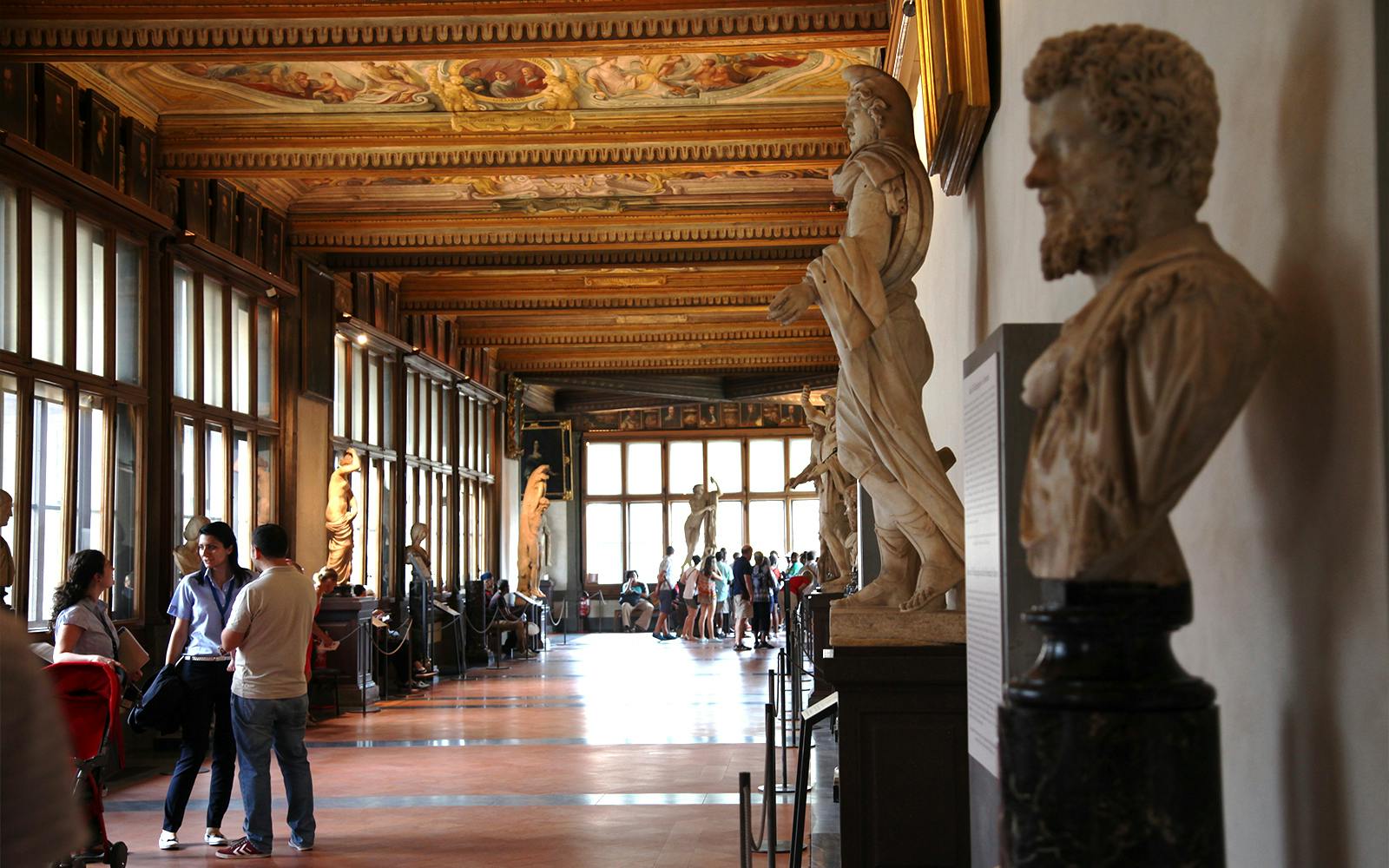 HIDDEN ANGLE
Tribune corridor corner
From the corridor corner, use the octagon doorway to frame the Tribune at 9:30 with zero reflections.
After the Uffizi
Ponte Vecchio views, Boboli shade, Mercato Centrale bites in one easy loop

Ponte Vecchio
Exit the Uffizi toward Piazza della Signoria, then follow Via Vacchereccia to the Arno for Florence’s classic bridge view. The river light at 18:00 makes the goldsmith windows glow, even when the crowds don’t.
Step onto Ponte Santa Trinita for photos with the bridge in frame.

Boboli Gardens
Cross Ponte Vecchio and enter at Palazzo Pitti for 45 minutes of shade after gallery rooms.

Piazza della Signoria
Sit by Palazzo Vecchio’s façade to decompress after Botticelli rooms and watch the square’s flow.

Mercato Centrale
Head to Piazza del Mercato Centrale for a fast lunch plate without a reservation after museum timing.
